In the world of metalworking, several machines are essential, including cut-off saws and mitre saws. But what exactly is the difference between these two types of saws, and which one is best suited to your application? Let’s take a closer look at their features and benefits.
Cut-off saw
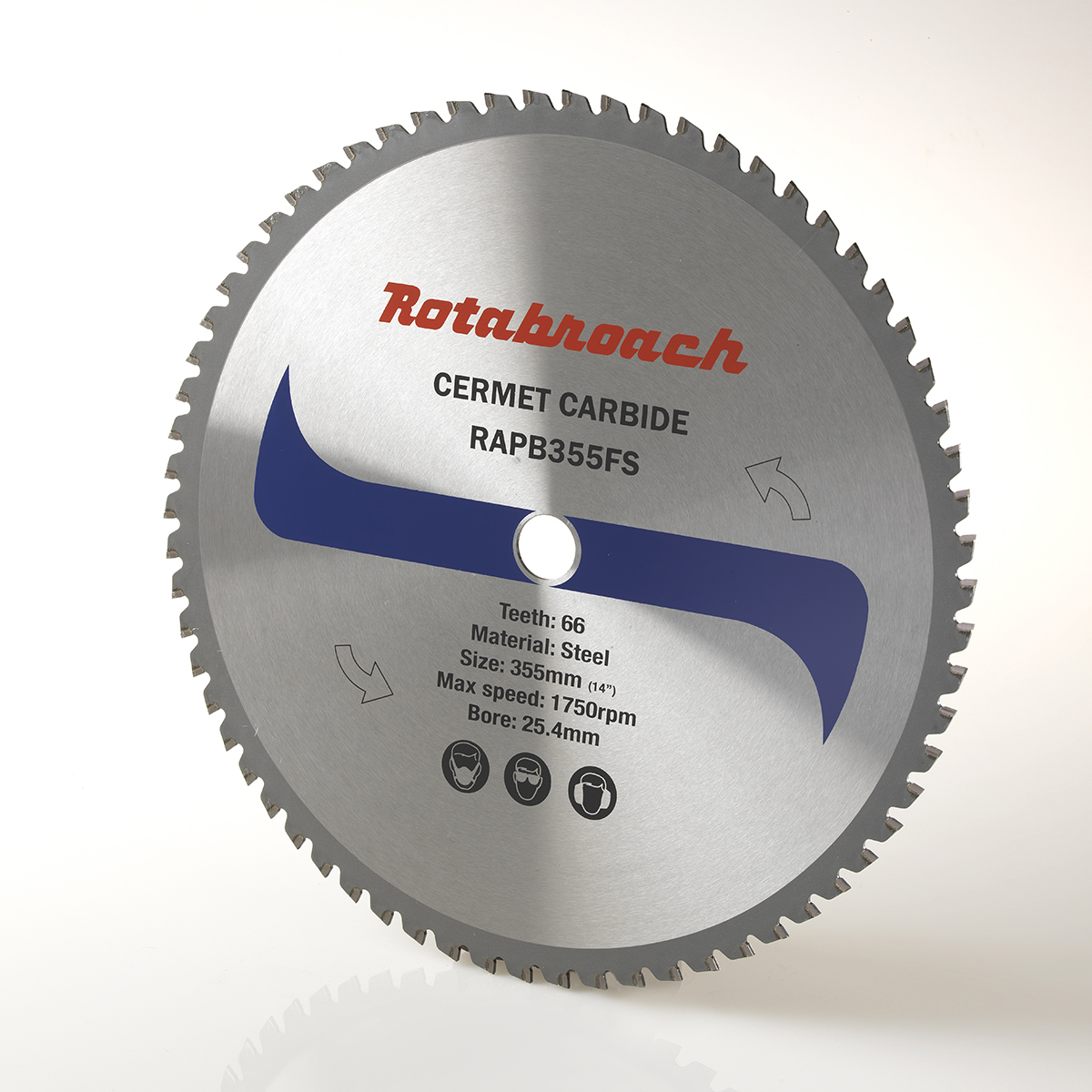
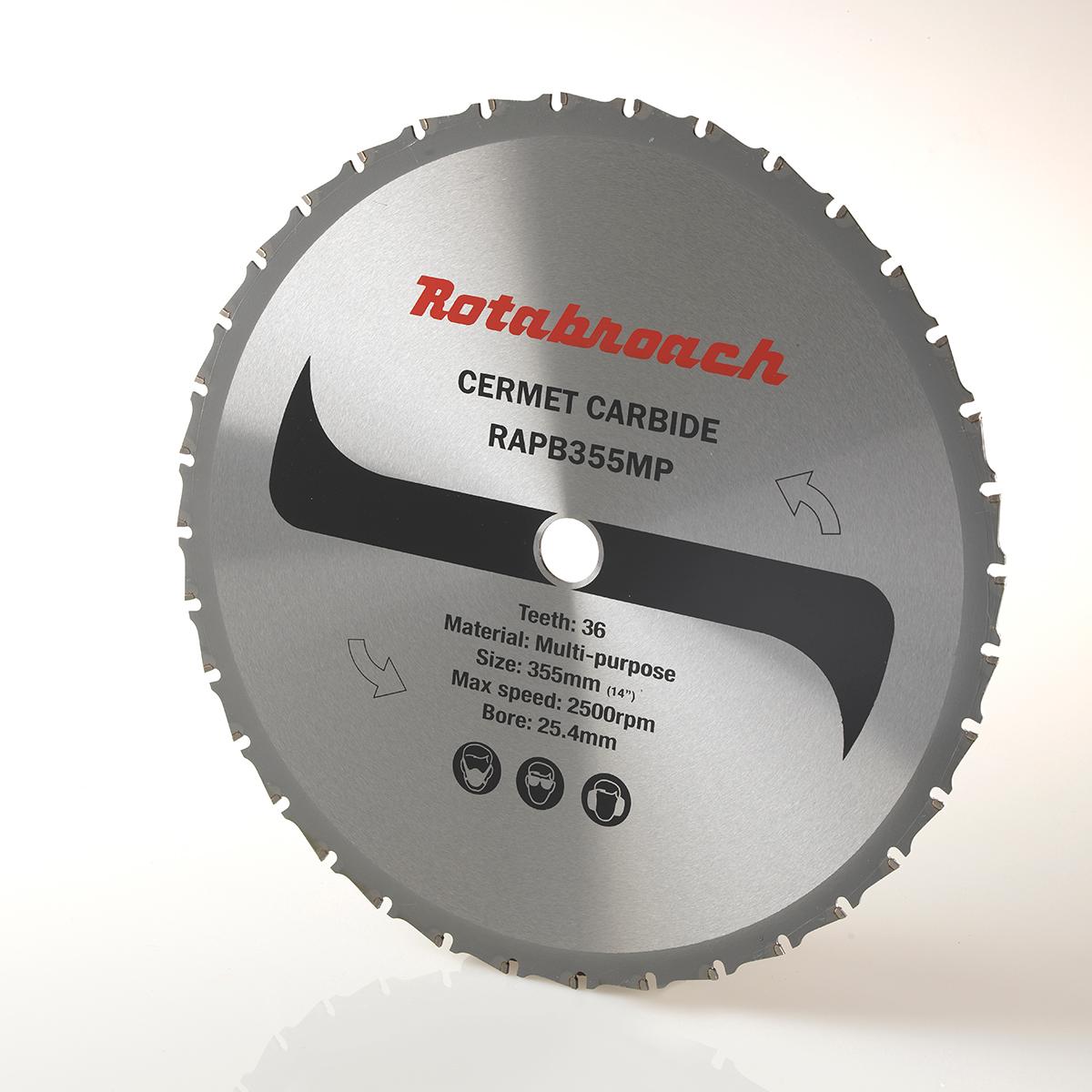
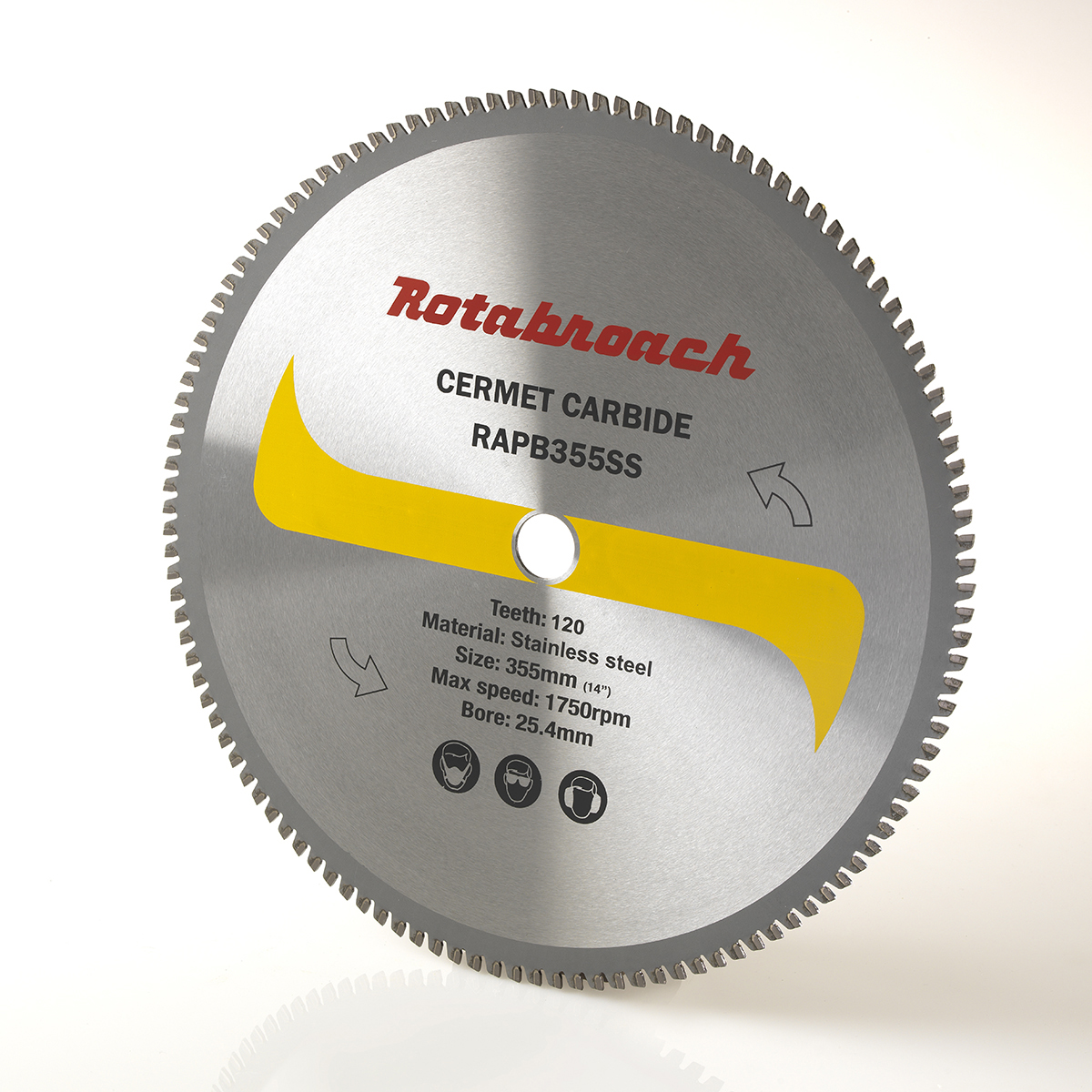
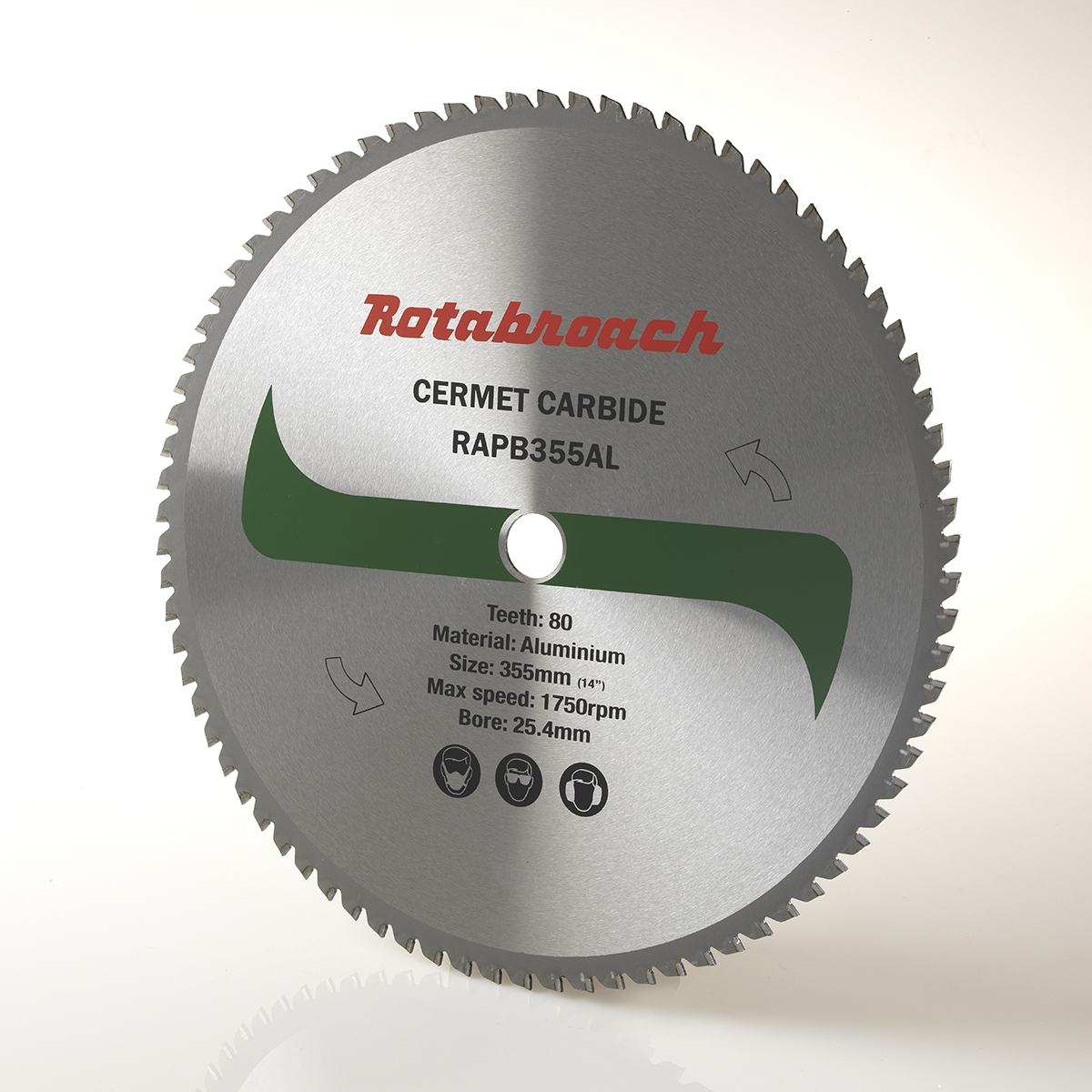
A cut-off saw, also known as a chop saw, is a powerful machine specifically designed for quickly and accurately cutting metal tubes, bars and profiles to length. It uses a vertical cutting motion and is ideal for applications requiring straight cuts. A cut-off saw allows users to cut materials quickly and with a high degree of precision, but cutting angles are generally limited to 90 degrees. Our range includes the powerful Rotabroach Element 14 with a 355 mm blade. It is designed to deliver fast, clean and cool cuts in a wide variety of metals. This market-leading cut-off saw and its accompanying Rotabroach blades produce burr-free cuts in metal without excessive sparking. During cutting, the Element 14 and Rotabroach saw blades generate very little heat, ensuring that the workpiece remains cool immediately after cutting.
Here are some key benefits of a cut-off saw:
- Speed and precision: Cut-off saws can cut metal components to length quickly and accurately, allowing you to work efficiently.
- Versatility: They are suitable for a wide range of metals.
- Stability: Cut-off saws usually have a sturdy base, ensuring stability during the cutting process.
A cut-off saw is therefore ideal for cutting hard metals and processing large quantities of material. Although it is limited to 90° cuts, this does not detract from its value in metal fabrication workshops and on construction sites.
Mitre saw
A mitre saw, on the other hand, is a more versatile power tool designed to make precise cuts at various angles. It features a table that can rotate to the left and right for mitre cuts. Some mitre saws also have a tilting head for bevel cuts or a combination of mitre and bevel cuts.
Mitre saws are popular in woodworking for cross-cutting, cutting mouldings and trim, where angled cuts are required. They are also widely used for DIY projects and home renovations thanks to their precision and flexibility when making different types of cuts.
Like cut-off saws, mitre saws are equipped with safety features such as a blade guard. However, they usually do not have a vice or clamp, as the material is generally held against a fence during cutting.
Mitre saws are therefore not suitable for heavy-duty metalworking in the same way as cut-off saws. Instead, they are primarily designed for woodworking and more intricate cuts. Did you know that Evolution offers multi-material mitre saws in its Rage range? These saws are primarily designed for cutting wood but can also be used occasionally for cutting metal. To be clear, however, they are not suitable for heavy-duty metalworking and are intended for occasional use only.
Some advantages of a mitre saw include:
Angled cuts: Mitre saws can easily make angled cuts, which is essential for assembling components at various angles.
Accuracy: They offer a high degree of precision when setting the desired cutting angle.
Safety: With the proper equipment and correct operating techniques, mitre saws are safe to use.
Which one should you choose?
Choosing the right power tool depends on your specific needs and project requirements. If your work involves making a large number of straight cuts in heavy materials, the power and durability of a cut-off saw will be invaluable. Conversely, if your project requires a variety of precise, angled cuts – for example, when working on cabinets, mouldings or other intricate woodworking tasks – a mitre saw is likely to be the tool of choice.
Important to know
However, it is important to remember that although these power tools can deliver exceptional performance, they also require a certain level of skill and safety awareness. Always ensure that you have received the necessary training to operate these tools safely, wear the appropriate personal protective equipment and follow the manufacturer's operating instructions to minimise potential risks.
Both cut-off saws and mitre saws play an important role in metalworking, construction, woodworking and DIY projects. Each tool offers unique advantages and capabilities. The strength of a cut-off saw lies in its power and durability when making straight cuts and working with tough metals, while a mitre saw offers versatility and precision for a range of angled cuts. Understanding these differences will help you choose the right tool for your specific tasks and ensure that your projects are completed efficiently, accurately and safely.
The choice between a cut-off saw and a mitre saw depends on the specific requirements of your project. If you mainly make straight 90-degree cuts, a cut-off saw is probably the best choice. Consider, for example, the Rotabroach Element 14.
However, if you frequently need to make angled cuts, a mitre saw is essential.
Did you know that there is also a combination mitre and cut-off saw for metal? The powerful Evolution S355 MCS is the only model in the world that combines the best of both worlds.
Take a look at our webshop to explore our range of sawing machines and other equipment designed to help you achieve accurate, professional results. We are here to support you at every stage of your metalworking projects. Alternatively, discover our combo deals and take advantage of these great offers.
Choose the right saw for the right application
.